
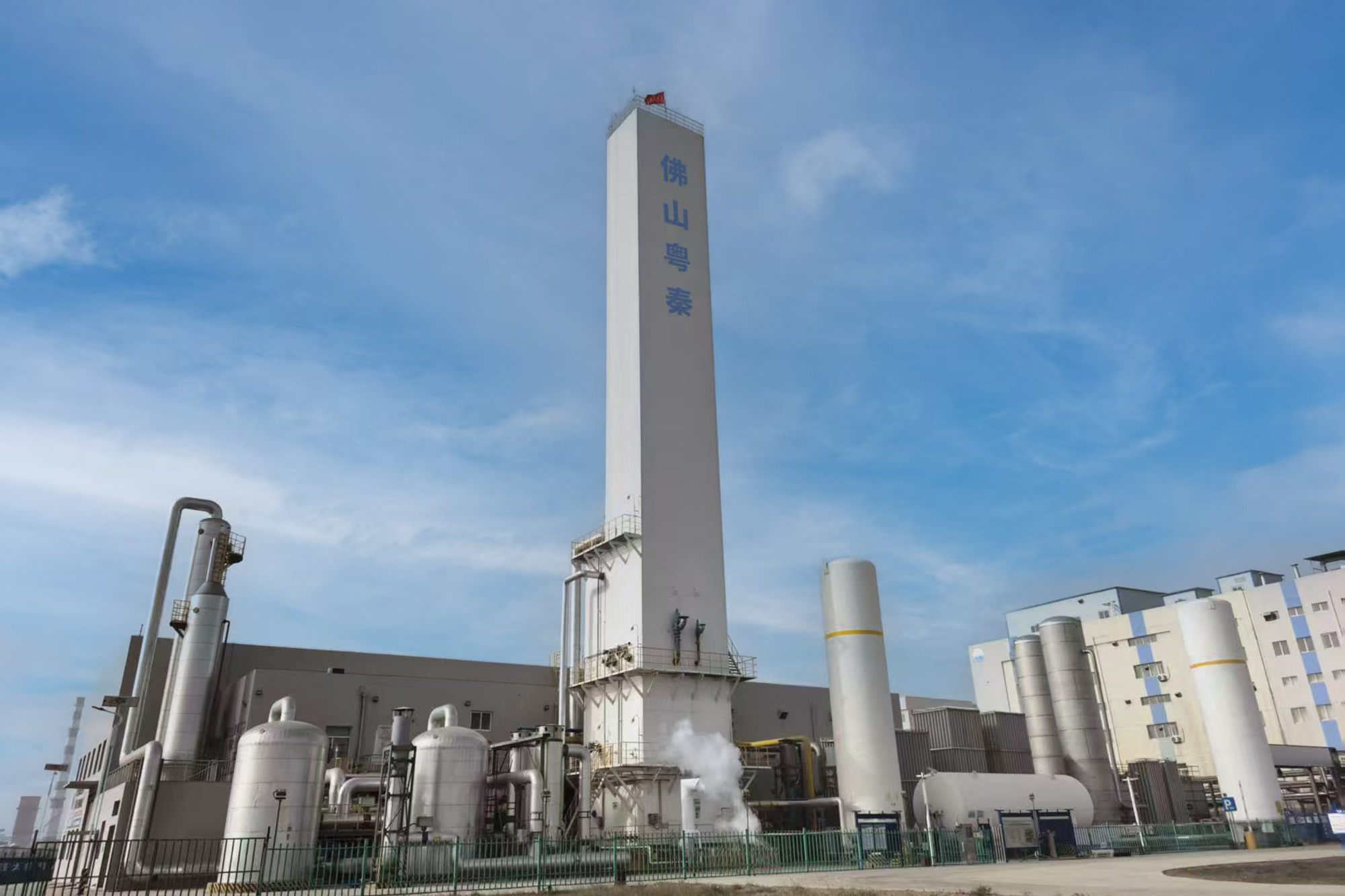
In the operation of air separation units (ASU), the column pressure is a key parameter that directly affects vapor–liquid equilibrium and separation efficiency. By selecting appropriate detection points and configuring automated control loops, precise regulation of pressure can be achieved, ensuring stable rectification performance. This paper proposes a cascade control scheme based on column pressure sensitivity points. The method provides fast response to load and operating fluctuations, reduces the risk of process abnormalities, and secures stable output of oxygen, nitrogen, and argon products. The scheme offers significant technical support for fine control and stable production in ASUs.
Background of Air Separation Technology
Air separation units adopt cryogenic distillation to separate oxygen, nitrogen, and argon from liquefied air. The main rectification column is responsible for the separation of oxygen and nitrogen, while also providing feed for the argon system. The operating pressure of the column not only determines the vapor–liquid equilibrium but also influences nitrogen blockage risks, product purity, and overall cold balance.
If the column pressure deviates abnormally, it can disturb heat transfer in the top condenser or the bottom reboiler, destabilize the concentration gradient, and impair downstream argon rectification. Thus, accurate and timely control of column pressure is essential to maintain the stability of the entire ASU.
Pressure Sensitivity Points and Control Concept
The pressure sensitivity point of the main rectification column is usually located near the top condenser inlet or in the upper packed section. Pressure fluctuations in this region are most indicative of overall process changes and have a direct effect on nitrogen–oxygen composition distribution.
Through process simulation and calculation, the design pressure at this sensitive point is determined and set as the primary process control loop (PIC) in the DCS. The primary loop measures this pressure and performs PID adjustments, outputting to the secondary process control loop, which regulates liquid nitrogen cooling capacity or expander flow. The secondary loop, in turn, acts on column pressure, thereby achieving closed-loop regulation aligned with process requirements.
Measures to Prevent Process Lag
If pressure fluctuations cannot be addressed promptly, deviations in product quality may occur. To avoid excessive process lag, the following measures are applied in this scheme:
Signal Conversion – Sampling pressure values are converted into thermodynamic pressure and amplified, improving signal sensitivity.
Fast-acting Variables – Expander flow is selected as the manipulated variable in the secondary loop, enabling quick adjustment of the cold balance and rapid correction of column pressure.
Optimized Sampling – Shorter sampling intervals are configured in the DCS to enhance dynamic response.
Measures to Prevent Overshoot
Under high load or large disturbances, wide PID adjustment ranges may cause excessive actuator actions, resulting in severe pressure swings. To prevent overshoot, the following restrictions are implemented:
Limiting the PIC output signal within the rated capacity of liquid nitrogen cooling;
Defining upper and lower limits for the secondary loop output based on equipment design capacity to prevent boundary violations;
Introducing soft-start and damping mechanisms into the control logic to minimize adjustment shocks.
Conclusion
The proposed cascade pressure control scheme significantly improves ASU stability under load fluctuations and process disturbances. By combining pressure-sensitive point monitoring, coordinated primary–secondary loops, and enhanced signal amplification with output limitation measures, the scheme reduces the occurrence of nitrogen blockage and ensures consistent supply of oxygen, nitrogen, and argon products.
Looking forward, with the continued advancement of DCS systems and the integration of intelligent control algorithms, ASUs will achieve higher levels of automation. The deep integration of process engineering and automation control will drive the cryogenic air separation industry toward greater efficiency, stability, and intelligence.