
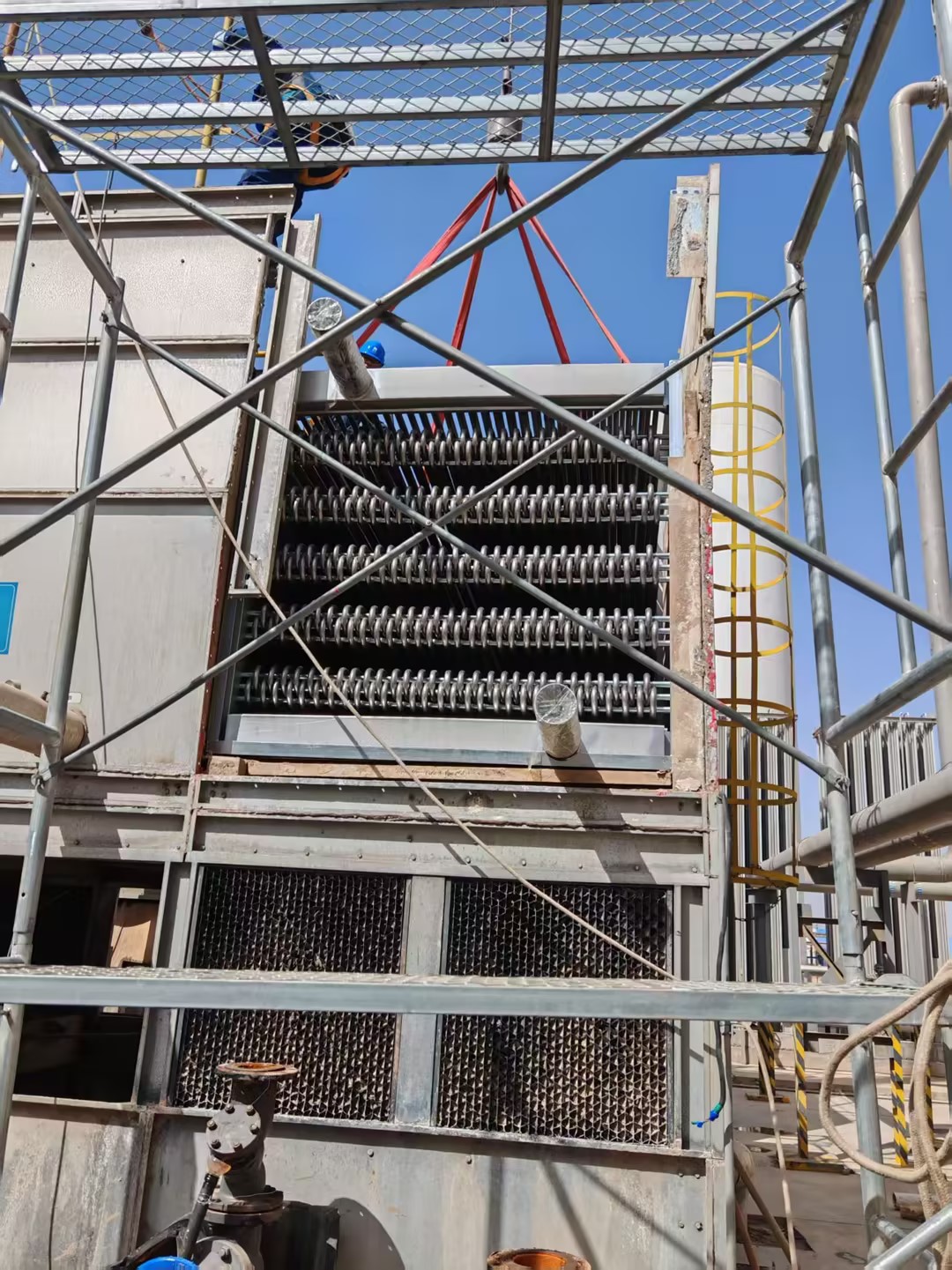
In an air separation unit (ASU), the core function of a cooling tower is to supply circulating cooling water to remove the substantial heat generated during the operation of air separation equipment. This is specifically reflected in the following aspects:
Maintaining process temperature
Air separation separates air based on differing boiling points. Compressed gas reaches extremely high temperatures. Cooling water is used in interstage coolers and final coolers to reduce the temperature of compressed air to near ambient levels, ensuring efficient subsequent liquefaction and distillation.
Ensuring stable equipment operation
It provides a cooling source for oil coolers, removing frictional heat from the lubricating oil of high-speed rotating equipment such as air compressors and booster compressors. This keeps oil temperatures and bearing metal temperatures within safe ranges.
Reducing energy consumption
Heat removal via circulating water lowers the temperature of gas before it enters the molecular sieve purification system. Lower gas temperatures improve adsorption performance and reduce adsorbent loading. Excessively high water temperatures will cause a significant increase in power consumption of the compressor unit.
Operating principle
The cooling tower achieves temperature reduction through heat exchange between water and air. It recools the heated circulating water to enable water recycling, greatly conserving water resources compared with direct water discharge.