
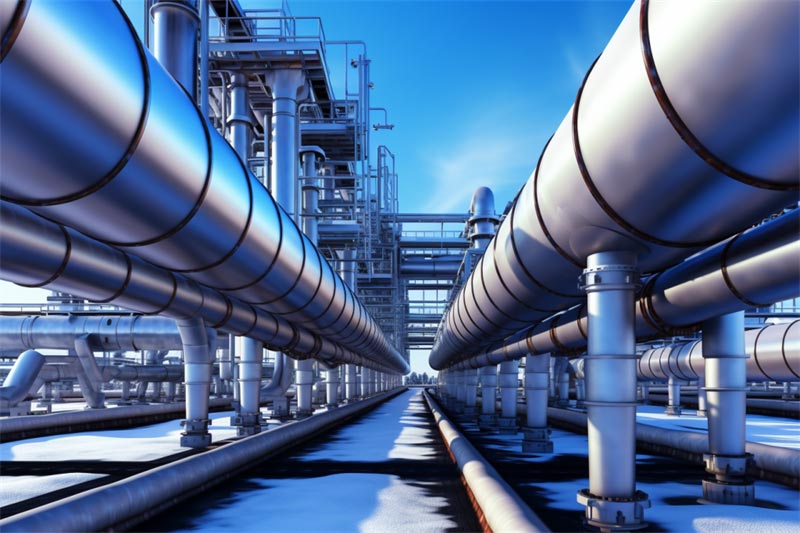
A cryogenic ducting pipe is an insulated duct pipe that is manufactured so that it is able to withstand extremely cold temperatures.
There are several views on what constitutes a cryogenic duct tube: while some regard them as the systems that are able to withstand -290C temperatures (representing the point from which carbon steel materials start presenting embrittlement); some others believe cryogenic piping systems are those that operate below -1500C (-3000F).
Cryogenic pipes play a key role in the transportation and industrial processing of liquefied technical gases such as nitrogen, oxygen, butane, methane, liquefied natural gas (LNG), ethylene, or ammonia, among others.
In order to provide effective insulation, cryogenic piping present certain design requirements that help guarantee the transportation and storage of such substances is efficient and safe:
- The choice of materials must be guided by cryogenic engineering expertise, as this type of pipe will experience corrosion and other types of deterioration. Common materials for cryogenic ducting pipes include stainless steel, aluminum alloy, copper alloy and copper nickel alloy. Additionally, other non-metallic materials are used for different components in cryogenic ducting pipe, including mineral wool, fiberglass, polyurethane, styrofoam, grafoil, or reinforced Teflon, among others.
- Suitable insulation technologies must be put to work in order to avoid heat losses or heat gains by environmental causes, which would make the system inefficient and potentially dangerous. The insulation might result in increased weight and rigidity in cryogenic piping systems.
In order to guarantee the necessary insulation, there are a number of technical possibilities that can be looked into, which include the use of expanded foams (such as polyurethane or foam glass); the use of perlite in powder insulation systems; employing vacuum insulation; or techniques based on evacuated powder and fibrous insulation, among other potential solutions.
- Appropriate support and valve systems must be installed in order to withstand the amount of gases that are generated when cryogenic substances are vaporized. On the contrary, sealed containers would present safety issues due to pressure build-ups.
- Cryogenic pipe systems must also take into account that the outstanding thermal stresses created when materials are subjected to extremely low temperatures mean that materials contract. In order to compensate for this effect, they must use materials that present adequate flexibility.
- At the same time, decreased temperatures can also cause materials to become brittle, which is another factor to consider in the design and production of cryogenic pipes.
- Prior to being put to work, cryogenic piping must be subjected to a number of tests in order to guarantee they will be able to withstand the conditions necessary for their efficient performance.