
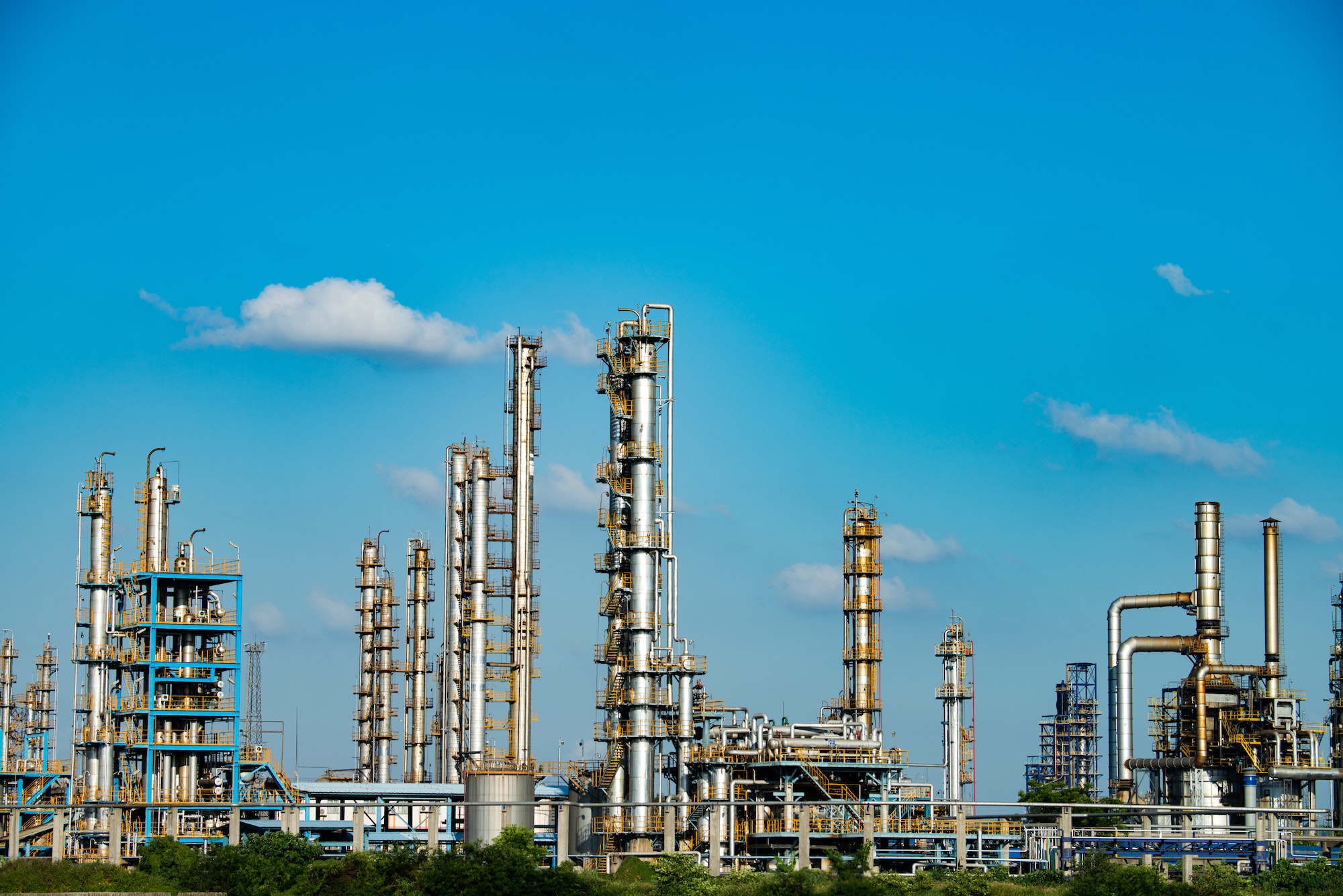
Air separation unit (ASU) are essential industrial systems that fractionate atmospheric air into its primary components-nitrogen, oxygen, argon, and trace inert gases-using technologies such as cryogenic distillation, pressure swing adsorption (PSA), or membrane separation. This process enables the production of high-purity gases critical to numerous sectors, driving efficiency, safety, and quality across modern manufacturing.
Metallurgical Industry
In steel production, ASU supply oxygen for blast furnaces to accelerate impurity oxidation, reducing smelting time by 30–50%. Nitrogen is used for inerting during casting to prevent steel oxidation, while argon facilitates ladle refining for uniform steel composition.
Non-ferrous metal processing, such as aluminum smelting, relies on oxygen to enhance alumina refining efficiency, and nitrogen for annealing to maintain metal surface quality.
Chemical and Petrochemical Sectors
Oxygen from ASU supports efficient combustion in cracking furnaces, while nitrogen acts as a blanketing gas to mitigate explosion risks in chemical storage and transportation. High-purity nitrogen is a key raw material in ammonia synthesis, directly impacting production yields.
In LNG processing, nitrogen is used for pipeline inerting to eliminate fire hazards, and oxygen aids in coal gasification to produce syngas for synthetic fuel production.
Electronics and Semiconductor Manufacturing
Ultra-high-purity argon (≥99.9999%) is critical for sputtering and thin-film deposition in semiconductor fabrication, ensuring contamination-free processes. Nitrogen purges CVD chambers and diffusion furnaces to maintain inert atmospheres and optimize chip yield.
Food and Beverage Industry
Nitrogen is widely used in modified atmosphere packaging to extend shelf life by displacing oxygen and inhibiting microbial growth. Liquid nitrogen enables rapid freezing for food preservation, aligning with rising demands for frozen and convenience foods.
Healthcare and Life Sciences
Medical-grade oxygen (≥99.5%) from cryogenic ASU is vital for hospital respiratory systems, emergency care, and hyperbaric treatments. Nitrogen supports cryogenic storage of biological samples and vaccines at ultra-low temperatures.
Air Separation Unit Technologies
Cryogenic Distillation
The dominant method for large-scale, high-purity gas production (oxygen ≥99.5%, nitrogen ≥99.999%), cryogenic ASU operate by cooling air to liquefaction (-196°C for nitrogen, -183°C for oxygen) and separating components via fractional distillation in multi-column systems. This technology is energy-intensive but cost-effective for high-volume outputs, suitable for steel mills, chemical plants, and LNG facilities.
Rare gases like neon,,and xenon are exclusively recovered through cryogenic distillation, while helium requires advanced recovery processes.
Non-Cryogenic Methods
PSA/VPSA: Uses adsorbent materials (e.g., zeolites) to separate gases based on molecular affinity, ideal for on-demand, medium-purity applications (nitrogen 95–99.9%). Common in food packaging, small-scale manufacturing, and medical oxygen concentrators.
Membrane Separation: Employs selective permeation membranes to separate gases by molecular size, suitable for low-purity nitrogen (90–95%) in maritime and remote operations.